A blog dedicated to chronicling the history of SC Green White, a soccer club founded in Chicago in 1956.
Sunday, April 22, 2012
1963
Green White was always strong indoors, but all the stars seemed to align for Green White during the 1963 season. The Kaempf brothers returned to the club, and along with the Laxgang brothers (Joe and Stefan, photo), they led the team to the indoor title.
This is the way Willi Franz remembered it when he wrote about it the following year: "Sunday after Sunday Green White played in the Major Division indoor game of the week at the Chicago Armory in front of 3000 fans. Finally, in the last game of the 1963 season, the team scratched and clawed their way to a 0-0 tie against a very strong Schwaben AC team (the eventual outdoor Major Division champs), and with that point, clinched their very first championship of the Major Divison."
He listed the starting lineup for that indoor team as: Sam Berleth, Dietmar Dittrich, Stefan Laxgang, Joe Laxgang, Georg Kaempf, Gottfried Winter, and Adi Kaempf.
After the big game, the club threw a big "Hallen Siegesfeier" (or indoor soccer victory party). And judging by the money they pulled in at the bar that night, the players and fans were in a very celebratory mood.
Green White off the field
With Michael Melcher still at the helm as the president, the club membership continued to grow. Original members married and had children (see the growing list below), and others joined as well. Helmut Filian was one of them. “I joined Green White in 1963. I was 19 years old at the time, and had just moved into the country. I lived a half block away from the clubhouse, and the next day I was there. I played for awhile when we practiced at the Forest Preserve over on Foster, but I was more of a supporter, and a club member, then a player. And then later, I helped out with the kids program.”
By now, the club was not only drawing fans at their games, they were drawing crowds for their social events. The Fasching Ball, a full-dress costume ball, was a big hit (photo), as was the "Weinachtsfeier" (or Christmas party). They were also staging an annual "Stiftungsfest" or anniversary party. The 7th anniversary party was held on July 27th in 1963. Green White was still hampered by their insufficient facilities, but that was in the process of being rectified. More on that in the coming years.
1963 also marks the first year that the club named a Miss Green White. Her duties included representing the club at the various different German functions in Chicagoland (and there were many). The first girl lucky enough to wear that Miss Green White crown was Helga Peltzer. (Spoiler alert: She'll also wear the crown in 1964 and 1965)
GW Weddings in 1963
Horst & Herta Melcher
Joe & Helen Hertl
*Also married in 1963, Adam and Anne-Marie Harjung, and Klaus and Hilde Kilian.
GW Babies Born in 1963
See any trend with the boy names?
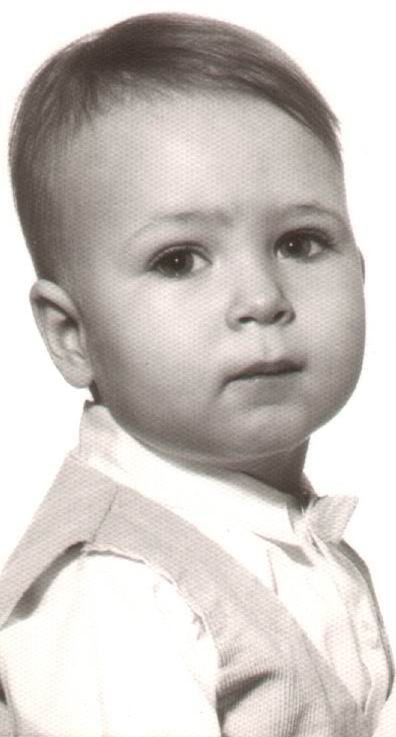
Richard Kaempfer (photo)
Richard Schneider
Richard Meschbach
Michael Blaas
Michael Schmaltz
Michael Kraemer
Albin Schwarz Jr.
Karin Bischof (photo)
Tina Zimmer (photo)
In Pop Culture
~The #1 pop hit of the year was “Sugar Shack” by Jimmy Gilmer and the Fireballs
~The #1 TV show of the year was “The Beverly Hillbillies”
~The Academy Award for Best Picture went to “Tom Jones”
Elsewhere in Chicago
~The Loyola Ramblers shocked the college basketball world by winning the NCAA championship.
~On December 29, 1963, the Bears intercepted New York Giants quarterback Y.A. Title five times and won the NFL championship. 45,801 fans came out to witness the 14-10 victory on an incredibly chilly afternoon at Wrigley Field. (And some say that Wrigley hasn't seen a championship!) Bill Wade scored both touchdowns.
Thursday, March 22, 2012
1962
1962 marked the first season that Green White uniforms sported the new logo, a slightly modified version of which (left), is still used today. Current club President Cindy Kaempfer explains how that came to be. "The club wanted to give themselves an identity separate from the Danube Swabian Society as a whole," she says. "Up until that point we had just been using a variation of their logo. This crest was redesigned by Eckhard Kaempfer, and featured the club's name written in German, along with something resembling the Chicago skyline."
In the early 60s, Chicago's skyline wasn't quite as recognizable (photo) as it is today, but the logo was later updated to include the Hancock and the Sears Tower, and that's the logo that Green White continues to use today.
On the field in 1962, Green White once again waged a strong campaign to return to the Major Division , but they had a few pitfalls along the way. The injury bug hit again, and one player, Toni Zimmer (photo) was hit especially hard. He broke his arm and hurt his knee that season. Sandor Gyurko also suffered an injury.
But Green White was in the hunt until the final week of the season. For the second straight year they fell just short, finishing in 2nd place.
The Maroons were the champions of the Major Division that year, and featured a pesky little attacking winger named Steve Pastorelli, who would later become a thirty-year member of Green White.
Off the Field
“Michael Melcher (father of Horst and Walter) was our president that year," Hans Bittenbinder remembers. He anchored a Green White board that featured a few of the old guard in key positions. Andreas Laxgang, a key member of the club since it's inception, served as the First Vice President, and Anton Wagner was the Second Vice President.
The rest of the board included Eckhard Kaempfer—Secretary, Horst Melcher—Treasurer, Wilhelm Franz—Protocol Secretary, Adam Harjung—First Festival President, Joe Hertl—Second Festival President, Anton Kirschner—Festival President (Kitchen), Matz Kraemer—General Manager, Martin Schneider—First Team Manager, Walter Klaus—Reserves Manager, Paul Wenson—Kids Manager, Georg Kovac & Sandor Gyurko—Cashiers, Heinrich Schaefer—Judiciary Committee Chairman, Fritz Herbstler—Assessor, Peter Erhardt & Hans Bittenbinder—Midwest League delegates, Hans Schmidt & Eduard Speth—Equipment Managers, Alfred Langenfelder—Trainer/Paramedic, and Fritz Becker—Membership chairman.
Green White Wedding Bells
There were several Green White weddings in 1962.
Maria Laxgang married Wolfgang Blaas, Helen and Toni Zimmer were also wed, and Eckhard and Hildegard Kaempfer (photo) were married in St. Alphonsus Church on September 8th.
According to the official Green White books, the married couples received flowers (Blumen) from the club.
GW Babies
(Photo) Susan Zimmer (now Duffy, daughter of Steve & Maria Zimmer)
Walter Stadler (son of original member Franz and Trude)
Marcus Laxgang (son of Stefan and Christel Laxgang)
Anita Strumberger (daughter of Steve and Anni Strumberger)
Elsewhere in Soccer
*The 7th World Cup was staged in Chile in 1962. Naturally, with a South American location, Brazil was the heavy favorite. Not only were they the defending champions, they had the best player in the world, Pele. But after scoring in the opening match, he was injured and did not play the rest of the tournament. Even without him, Brazil met Czechoslovakia in the final and won easily. Sadly this World Cup is not remembered so much for the great soccer as it is for the fighting on the field. Argentina, Italy and Uruguay were all part of ugly incidents.
In Pop Culture
~The #1 pop hit of the year was “I Can’t Stop Loving You” by Ray Charles
~The #1 TV show of the year was “The Beverly Hillbillies”
~The Academy Award for Best Picture went to “Lawrence of Arabia”
Elsewhere in Chicagoland
~The Robert Taylor Homes were built.
~Randhurst Shopping Center opened in Mt. Prospect. It was considered a marvel. Carved from a farm at Rand and Elmhurst Roads, it announced to the world that the Northwest suburbs had arrived. “Randhurst didn’t open the floodgates,” Greg Perbolte, executive director of the Mount Prospect Historical Society said, “Randhurst was the floodgate.” It was the largest air conditioned mall in America at the time it was built.
Coming next month: 1963. Green White flexes their muscles in the indoor season, the Bears win a championship, and one first name dominates the Green White babies.
As always, if you have any thing to add or correct in this month’s installment, please drop me a line at amishrick@yahoo.com. I consider this a group project, and a work in progress, so we can add and subtract until we get it all exactly correct. If you have photos you’d like to contribute, please do.
Wednesday, February 22, 2012
1961
Green White returned to play in the First Division in 1961, a step down from the highs of 1960. The season was a bit of a struggle.
Thanks to a few defections (the Kaempf brothers), a few injuries (Albin Schwarz, John Benedek, and Toni Zimmer), a few semi-retirements (many of the original members were no longer playing), and a very full roster of indoor, outdoor, and tournament games on the schedule, no fewer than forty five different players wore the Green White uniform in 1961. It was probably the largest number of players for Green White in any individual season.
A few of those players are featured in this photo taken at Lane Stadium that year, including the Laxgang brothers (Stefan, Joe & Heinrich), Nick Willer, Adam Wambach, Alex Gyurko, Stefan and Toni Zimmer, Albin Schwarz and more. But there were many others that contributed in 1961.
Horst Melcher kept a list of all the players who played for Green White that season in the "Kasse Handbuch", and in addition to the players listed above, the following players were all listed as "active players" for at least a portion of the 1961 schedule: Han Bittenbinder, Samuel Berleth, Adolf Burger, Johnny & Willi Becker, John Benedek, Dietrich Ditmar, Joe Hertl, Anton Hohn, Adolf Hrabowy, Rudi Hrbacek, Eckhard Kaempfer, Klaus Kilian, Jacki Lorenz, Horst Melcher, Josef Mellert, Walter Mimler, Martin Mayer, George Polaretzky, Joe Schlenhardt, Hans Schmidt, Cartsten Schnepel, Gottfried Schwarzinger, Eduard Speth, Michael Weiss, Gottfried Winter, Josef Fessel, Goetz Nickel, John Vassiles, Gus Lampies, Erwin Mark, Soltan Stojkovic, Fred Ott, John & Michael Lepprich, Toni Rauscher, John Gebhardt, and Alfred Leufelder.
Despite their struggles, Green White put up a strong fight. Willi Franz remembered it this way: "All of the members hoped for a turn around, and a return to the Major Division, but Green White could only attain second place, and that wasn’t quite good enough to move back up. But we can say with pride that Green White played with the fighting spirit of one of the best, and the spectators often referred to our games as the game of the day."
1961 was a year of highs and lows. The team traveled together to play in places like Peoria, St. Joseph, Michigan, and Hamilton, Ontario, and those trips were among the highlights of the year.
"Those trips were so much fun," Adam Harjung remembers. "We all had a great time."
But in August, tragedy also touched the Green White family.
“My little brother died of leukemia died in 1961," Klaus Kilian remembers. "He was only 14 at the time, and had only been in this country for five years. He played for the Green White kids team, and it was a very sad time for all of us.”
Green White Off the Field
A new president took the helm of Green White in 1961. Matz Kraemer (shown here with his wife Joann) had been one of Green White's founders in 1956, and had served in several capacities in previous years before agreeing to become the president.
He presided over a Green White board that included some of the players listed above, in addition to Peter Erhardt, Anton Wagner, Martin Rutterschmidt, Walter Klaus, Adam Harjung, Fritz Herbstlek, Josef Hrbacek, George Kovasc, Henirich Wittje, Hans Bauer and Fritz Becker.
Wedding Bells are ringing
The Kraemers (shown above) were married in 1961, but they weren't the only ones.
Franz and Gertrude Stadler (left) also walked down the aisle that year.
Many more Green White couples would follow in the coming years.
Green White Babies born in 1961
*Future player Frank Speth (photo)
*Future player John Dunkas
*Gretchen Bittenbinder (daughter of long-time member Hans)
*Michael Hrbacek (son of star player Rudi)
In Pop Culture
~The Academy Award for Best Picture went to “West Side Story”
~The #1 pop hit of the year was “Tossin’ and Turnin’” by Bobby Lewis
~The #1 TV show of the year was “Wagon Train”
Elsewhere in Chicago
~McDonald's first filed for a U.S. trademark on the name McDonald's on May 4, 1961, with the description "Drive-In Restaurant Services". In the same year, they retired their mascot, "Speedy".
~The Chicago Blackhawks won the Stanley Cup (April 16, 1961). Among the star players on that team; Bobby Hull, Stan Mikita, Pierre Pilote and goalie Glenn Hall.
~The Dan Ryan Expressway opened to 95th Street.
~A Chicago television institution, Bozo’s Circus, debuted on Channel 9, WGN.
Coming next month: 1962. Green White tries again to return to the Major Division, the World Cup is held in Chile, and two institutions are built in Chicago.
As always, if you have any thing to add or correct in this month’s installment, please drop me a line at amishrick@yahoo.com. I consider this a group project, and a work in progress, so we can add and subtract until we get it all exactly correct. If you have photos you’d like to contribute, please do.
Thanks to a few defections (the Kaempf brothers), a few injuries (Albin Schwarz, John Benedek, and Toni Zimmer), a few semi-retirements (many of the original members were no longer playing), and a very full roster of indoor, outdoor, and tournament games on the schedule, no fewer than forty five different players wore the Green White uniform in 1961. It was probably the largest number of players for Green White in any individual season.
A few of those players are featured in this photo taken at Lane Stadium that year, including the Laxgang brothers (Stefan, Joe & Heinrich), Nick Willer, Adam Wambach, Alex Gyurko, Stefan and Toni Zimmer, Albin Schwarz and more. But there were many others that contributed in 1961.
Horst Melcher kept a list of all the players who played for Green White that season in the "Kasse Handbuch", and in addition to the players listed above, the following players were all listed as "active players" for at least a portion of the 1961 schedule: Han Bittenbinder, Samuel Berleth, Adolf Burger, Johnny & Willi Becker, John Benedek, Dietrich Ditmar, Joe Hertl, Anton Hohn, Adolf Hrabowy, Rudi Hrbacek, Eckhard Kaempfer, Klaus Kilian, Jacki Lorenz, Horst Melcher, Josef Mellert, Walter Mimler, Martin Mayer, George Polaretzky, Joe Schlenhardt, Hans Schmidt, Cartsten Schnepel, Gottfried Schwarzinger, Eduard Speth, Michael Weiss, Gottfried Winter, Josef Fessel, Goetz Nickel, John Vassiles, Gus Lampies, Erwin Mark, Soltan Stojkovic, Fred Ott, John & Michael Lepprich, Toni Rauscher, John Gebhardt, and Alfred Leufelder.
Despite their struggles, Green White put up a strong fight. Willi Franz remembered it this way: "All of the members hoped for a turn around, and a return to the Major Division, but Green White could only attain second place, and that wasn’t quite good enough to move back up. But we can say with pride that Green White played with the fighting spirit of one of the best, and the spectators often referred to our games as the game of the day."
1961 was a year of highs and lows. The team traveled together to play in places like Peoria, St. Joseph, Michigan, and Hamilton, Ontario, and those trips were among the highlights of the year.
"Those trips were so much fun," Adam Harjung remembers. "We all had a great time."
But in August, tragedy also touched the Green White family.
“My little brother died of leukemia died in 1961," Klaus Kilian remembers. "He was only 14 at the time, and had only been in this country for five years. He played for the Green White kids team, and it was a very sad time for all of us.”
Green White Off the Field
A new president took the helm of Green White in 1961. Matz Kraemer (shown here with his wife Joann) had been one of Green White's founders in 1956, and had served in several capacities in previous years before agreeing to become the president.
He presided over a Green White board that included some of the players listed above, in addition to Peter Erhardt, Anton Wagner, Martin Rutterschmidt, Walter Klaus, Adam Harjung, Fritz Herbstlek, Josef Hrbacek, George Kovasc, Henirich Wittje, Hans Bauer and Fritz Becker.
Wedding Bells are ringing
The Kraemers (shown above) were married in 1961, but they weren't the only ones.
Franz and Gertrude Stadler (left) also walked down the aisle that year.
Many more Green White couples would follow in the coming years.
Green White Babies born in 1961
*Future player Frank Speth (photo)
*Future player John Dunkas
*Gretchen Bittenbinder (daughter of long-time member Hans)
*Michael Hrbacek (son of star player Rudi)
In Pop Culture
~The Academy Award for Best Picture went to “West Side Story”
~The #1 pop hit of the year was “Tossin’ and Turnin’” by Bobby Lewis
~The #1 TV show of the year was “Wagon Train”
Elsewhere in Chicago
~McDonald's first filed for a U.S. trademark on the name McDonald's on May 4, 1961, with the description "Drive-In Restaurant Services". In the same year, they retired their mascot, "Speedy".
~The Chicago Blackhawks won the Stanley Cup (April 16, 1961). Among the star players on that team; Bobby Hull, Stan Mikita, Pierre Pilote and goalie Glenn Hall.
~The Dan Ryan Expressway opened to 95th Street.
~A Chicago television institution, Bozo’s Circus, debuted on Channel 9, WGN.
Coming next month: 1962. Green White tries again to return to the Major Division, the World Cup is held in Chile, and two institutions are built in Chicago.
As always, if you have any thing to add or correct in this month’s installment, please drop me a line at amishrick@yahoo.com. I consider this a group project, and a work in progress, so we can add and subtract until we get it all exactly correct. If you have photos you’d like to contribute, please do.
Wednesday, January 18, 2012
1960
SC Gruen Weiss began the 1960 season in the Major Division of the National Soccer League. Their core group of players remained.
"There were about 15 players," Fritz Becker remembers, "and those guys played all the time.”
This is the team that took the field in 1960 at the Donauschwaben Tournament in Canada in 1960. Back Row (R to L): Stefan Zimmer, Tony Hohn, Alex Gyurko, Klaus Kilian, Toni Rauscher, Joe Laxgang, Nick Willer. Front Row (R to L): Gottfried Schwarzinger, Stefan Markowitsch, Albin Schwarz, Martin Meyer, Dietmar Dietrich, Adam Wambach, Toni Zimmer.
The reserve team also featured many former first team players and original members of the team, but other former players had higher priorities.
"Some of them got girlfriends and wives and didn’t start coming around as much," Becker recalls.
"I was in college at the University of Illinois most of that year," original Green White member Frank Stadler remembers. "I wasn't around Chicago much and didn't play at all. 1960 was one of the years we acquired some players from other clubs. In short, we just didn’t have the horses to stay in the Major Division."
They made a valiant effort. It came down to the final game of the season; October 30, 1960. On that day, the deciding game was played to see which team would go back down to the First Division. It was Green White against Fortuna, and on this particular day, the black and white beat the green 2-0. The same fate awaited Green White in the indoor season.
Fellow German club Schwaben AC was once again crowned champion of the National Soccer League.
Green White Off the Field
While the soccer team struggled to stay in the Major division on the field, Green White was also struggling with the fact that they didn't exactly have Major Division facilities off the field.
"That clubhouse on Elston Avenue wasn't even a clubhouse," long time member George Polaretzky says now. "It was really a dance hall."
"I vaguely remember having our GW meetings in a bar area which was not very conducive to our needs," Stadler recalls.
But while the hall wasn't ideal for conducting soccer business, Green White was much more than a soccer club. They were also a social club, and that hall was the site of many memorable events. (Photo: The Bittenbinders and the Beckers enjoying an evening at that Elston Avenue hall)
"I was the Fest President when we had our clubhouse on Elston Avenue," Adam Harjung remembers with a smile. "We had all of our dances there, at least three every year; New Years Eve, Masquerade (Fasching), and the Schlachtfest. We used to go to all the other clubs events too. I would go to the South Side to the Wanderers, and I used to volunteer to go there, because that’s where I met the girl that became my wife.”
The social part of Green White was never stronger than it was in the 1960s, and that "clubhouse/dance hall" on Elston Avenue was the place it all happened. However, don't drive over there now to see if it's still hopping. It's changed a little bit since those days.
"It’s now a Muslim study center," Harjung points out.
Green White Babies born in 1960
*Future first team mainstay Frank Schmaltz
*Robert Klaus (shown here with his mother Hedy, sister of original Green White member Eckhard Kaempfer, and his father, long-time Green White member Walter Klaus.)
*Marianne Schmidt (daughter of long-time members Franz & Gisella, featured in this photograph from 1961)
*Robert Bischoff (son of original member Henri)
*And future player Jason Thodos.
In Pop Culture
~The #1 pop hit of the year was “Theme from a Summer Place” by Percy Faith
~The #1 TV show of the year was “Gunsmoke”
~The Academy Award for Best Picture went to “The Apartment”
Elsewhere in Chicago
~Chicago’s population according to the 1960 census was 3,550,404, making it the second biggest city in America. In the 8-county area the population was 6,794,461. (Photo: The Edgewater Beach Hotel 1960)
~The Chicago Cardinals football team, who had played their home games in Comiskey Park, moved to St. Louis. (They are now in Arizona)
~On May 2nd, 1960, WLS Radio became the first rock station in Chicago. Among the personalities on the air that first day: Dick Biondi.
~The 1960 National Convention of the Republican Party of the United States was held in Chicago from July 25 to July 28, at the International Amphitheater. Richard Nixon was nominated as the Republican candidate.
~On September 26, 1960, the first televised presidential debate in history took place at the WBBM-TV studios at McClurg Ct. in Chicago. John F. Kennedy debated Richard Nixon. 70 million Americans watched it on TV.
~On November 3, 1960, the Northwest Expressway was officially opened. It wouldn't be renamed the Kennedy Expressway until November 29, 1963--exactly one week after John F. Kennedy was assassinated.
~On November 8, 1960, John F. Kennedy was elected President of the United States. His overwhelming majority in Chicago (with the help of Mayor Daley) allowed him to win Illinois, one of the states that clinched his victory.
Coming next month: 1961. Green White tries to claw their way back into the Major Division, the Blackhawks win the Stanley Cup, Golden Arches are trademarked, and a Bozo arrives in Chicago.
As always, if you have any thing to add or correct in this month’s installment, please drop me a line at amishrick@yahoo.com. I consider this a group project, and a work in progress, so we can add and subtract until we get it all exactly correct. If you have photos you’d like to contribute, please do.
"There were about 15 players," Fritz Becker remembers, "and those guys played all the time.”
This is the team that took the field in 1960 at the Donauschwaben Tournament in Canada in 1960. Back Row (R to L): Stefan Zimmer, Tony Hohn, Alex Gyurko, Klaus Kilian, Toni Rauscher, Joe Laxgang, Nick Willer. Front Row (R to L): Gottfried Schwarzinger, Stefan Markowitsch, Albin Schwarz, Martin Meyer, Dietmar Dietrich, Adam Wambach, Toni Zimmer.
The reserve team also featured many former first team players and original members of the team, but other former players had higher priorities.
"Some of them got girlfriends and wives and didn’t start coming around as much," Becker recalls.
"I was in college at the University of Illinois most of that year," original Green White member Frank Stadler remembers. "I wasn't around Chicago much and didn't play at all. 1960 was one of the years we acquired some players from other clubs. In short, we just didn’t have the horses to stay in the Major Division."
They made a valiant effort. It came down to the final game of the season; October 30, 1960. On that day, the deciding game was played to see which team would go back down to the First Division. It was Green White against Fortuna, and on this particular day, the black and white beat the green 2-0. The same fate awaited Green White in the indoor season.
Fellow German club Schwaben AC was once again crowned champion of the National Soccer League.
Green White Off the Field
While the soccer team struggled to stay in the Major division on the field, Green White was also struggling with the fact that they didn't exactly have Major Division facilities off the field.
"That clubhouse on Elston Avenue wasn't even a clubhouse," long time member George Polaretzky says now. "It was really a dance hall."
"I vaguely remember having our GW meetings in a bar area which was not very conducive to our needs," Stadler recalls.
But while the hall wasn't ideal for conducting soccer business, Green White was much more than a soccer club. They were also a social club, and that hall was the site of many memorable events. (Photo: The Bittenbinders and the Beckers enjoying an evening at that Elston Avenue hall)
"I was the Fest President when we had our clubhouse on Elston Avenue," Adam Harjung remembers with a smile. "We had all of our dances there, at least three every year; New Years Eve, Masquerade (Fasching), and the Schlachtfest. We used to go to all the other clubs events too. I would go to the South Side to the Wanderers, and I used to volunteer to go there, because that’s where I met the girl that became my wife.”
The social part of Green White was never stronger than it was in the 1960s, and that "clubhouse/dance hall" on Elston Avenue was the place it all happened. However, don't drive over there now to see if it's still hopping. It's changed a little bit since those days.
"It’s now a Muslim study center," Harjung points out.
Green White Babies born in 1960
*Future first team mainstay Frank Schmaltz
*Robert Klaus (shown here with his mother Hedy, sister of original Green White member Eckhard Kaempfer, and his father, long-time Green White member Walter Klaus.)
*Marianne Schmidt (daughter of long-time members Franz & Gisella, featured in this photograph from 1961)
*Robert Bischoff (son of original member Henri)
*And future player Jason Thodos.
In Pop Culture
~The #1 pop hit of the year was “Theme from a Summer Place” by Percy Faith
~The #1 TV show of the year was “Gunsmoke”
~The Academy Award for Best Picture went to “The Apartment”
Elsewhere in Chicago
~Chicago’s population according to the 1960 census was 3,550,404, making it the second biggest city in America. In the 8-county area the population was 6,794,461. (Photo: The Edgewater Beach Hotel 1960)
~The Chicago Cardinals football team, who had played their home games in Comiskey Park, moved to St. Louis. (They are now in Arizona)
~On May 2nd, 1960, WLS Radio became the first rock station in Chicago. Among the personalities on the air that first day: Dick Biondi.
~The 1960 National Convention of the Republican Party of the United States was held in Chicago from July 25 to July 28, at the International Amphitheater. Richard Nixon was nominated as the Republican candidate.
~On September 26, 1960, the first televised presidential debate in history took place at the WBBM-TV studios at McClurg Ct. in Chicago. John F. Kennedy debated Richard Nixon. 70 million Americans watched it on TV.
~On November 3, 1960, the Northwest Expressway was officially opened. It wouldn't be renamed the Kennedy Expressway until November 29, 1963--exactly one week after John F. Kennedy was assassinated.
~On November 8, 1960, John F. Kennedy was elected President of the United States. His overwhelming majority in Chicago (with the help of Mayor Daley) allowed him to win Illinois, one of the states that clinched his victory.
Coming next month: 1961. Green White tries to claw their way back into the Major Division, the Blackhawks win the Stanley Cup, Golden Arches are trademarked, and a Bozo arrives in Chicago.
As always, if you have any thing to add or correct in this month’s installment, please drop me a line at amishrick@yahoo.com. I consider this a group project, and a work in progress, so we can add and subtract until we get it all exactly correct. If you have photos you’d like to contribute, please do.
Saturday, December 17, 2011
1959
The year started off with a bang for S.C. Green White. While the front pages of the Chicago Daily News trumpeted the news that Alaska had just been proclaimed the 49th state of the union by President Eisenhower, the weekend magazine section of the paper was about Chicago's ethnic soccer boom.
And which team was featured in that Chicago Daily News Weekend cover picture? A certain German team with Green and White uniforms. (Oh sure, there's also another team in that picture, but let's not get bogged down by those details).
Green White still had it's core of (mainly Donauschwaben) German players, they also added a few other nationalities. Hungarian-American Alex Gyurko played his first game for Green White that season. "That team was so good, I played mostly for the reserves."
Despite the all-German nature of the club, Gyurko (photo) said he always felt like he belonged. "I came from Austria-(Linz-Wells-Salzburg), so I spoke some Austrian German and in those days -the meetings used to be in German. But everybody was very friendly. I was by myself--I had no family or relatives in the state, and they went out of their way to make me feel very comfortable, especially the Metzingers, Martin Schneider, Al Schwartz and family, the Zimmers and many others--the whole board and all the players. I made life long friends."
With a brand new club president at the helm (Paul Wenson), Green White charged into what would become their first year in the top division of both the indoor and outdoor leagues.
Adam Kaempf remembers it well. "When we moved up to the Major Division from the First Division, that was one of the highlights of my soccer playing life. We were new, we didn’t even know each other when we started, and we built that together."
It was a slightly different game at that time, a more offensive-minded attack.
Klaus Kilian explains, "In those days we had a different system. We played two fullbacks, three halfbacks, and five forwards. I played mostly defender.”
Another defensive minded player was Toni Filian. When the opponent was the Slovaks, his assignment was always the same. “He was our Murphy stopper," Kaempf says. "(Slovaks striker and U.S. National Team Member) Eddie Murphy was one of the best players in the league; big tall guy, and Toni was this little guy, but he stopped him cold.”
For other players it didn't go as well. Hans Metzinger broke his leg, all but ending his soccer career with the Green White first team.
But Green White played on. With star players like the Laxgang and Kaempf brothers, and Steve Zimmer, the team was competitive every game. But as the year ended, Green White found itself near the bottom of the standings.
They would have until the fall of 1960 to save their spot in the Major Division.
Elsewhere in Soccer
1959 also marked the beginning of the modern era for collegiate soccer in America. The NCAA staged their first ever Men's Division I Championship tournament. Eight teams participated. Saint Louis University beat Bridgeport 5-2 in Connecticut to win the championship.
(Photo: 1959 Saint Louis Championship team)
Green White Youth
A long time Green White member made his debut for the Juniors in 1959. "That was my first year," Joe Schlenhardt (photo) remembers. "The coach was Hans Bauer. The trainer was Andreas Laxgang.”
But that wasn't the only youth team in 1959. The end of Hans Metzinger's playing career with the first team was also the beginning of his coaching career with Green White youth. In 1959 Green White fielded their first Juvenile team, a younger group of boys--not quite old enough to play for the Juniors.
Green White Social Life
Green White has always been about more than just the soccer.
“We all went to each other’s weddings," Adam Kaempf says. "We were all together all the time.”
One of those weddings took place in 1959. Two prominent Green White families were merged forever on November 14, 1959 when 19 year old Maria Kirschner married 21 year old Stefan Zimmer at St. Alphonsus church (photo). Stefan, of course, was one of the star players of the team. Maria's brother Toni was one of the founding members.
Weddings were in the air. Fellow Green Whiter Nick Willer married his wife Lori on the same day, and in the exact same church, just an hour later.
Many Green White weddings followed the next few years.
“We were all approximately the same age," Hans Bittenbinder reminds us. "We all got married approximately the same time, and we all had kids around the same time, so we naturally had a lot in common.”
Those common bonds would serve them well as Green White began the 1960s.
Green White Babies
*Two future professional soccer players who both grew up playing for Green White were born in 1959: Robert Meschbach and Joe Filian.
Other Green White babies born that year included...
*Christine Metzinger
*Eddie Spaeth
and
*Inge Schneider
Elsewhere in Chicago
~Hugh Hefner bought a mansion located at 1340 N. State Parkway in 1959 after he divorced his first wife Millie. He dubbed it "The Playboy Mansion". The brass plate hanging over the door said it all: 'If You Don't Swing, Don't Ring.' Lots of people rang. A veritable Who's who of Chicago's hip young society eventually stopped by the mansion. In his book "Kup's Chicago," Irv Kupcinet described the scene as he witnessed it..."There are voluptuous Playboy Bunnies in his office, his reception rooms, his swimming pool, and throughout his lavish North State Parkway mansion. And they are enticing decorations at his Friday night parties, which start at Midnight, and continue until sunup.”
~Just a few blocks away, 1959 was also a big year in the history of improvisational comedy. Second City was founded that year.
~Chicago also welcomed a reigning British monarch for the very first time in 1959. In July, Queen Elizabeth II came to Chicago for the opening of the St. Lawrence Seaway. She and Prince Phillip sailed down the new seaway in the Britannia royal yacht.
Coming next month: 1960. Green White plays a dramatic game on the final day of the season to determine it's fate in the Major Divison, the Northwest Expressway opens, a new U.S. president is elected, a football team moves out of town, and the first rock and roll station moves into town.
As always, if you have any thing to add or correct in this month’s installment, please drop me a line at amishrick@yahoo.com. I consider this a group project, and a work in progress, so we can add and subtract until we get it all exactly correct. If you have photos you’d like to contribute, please do.
And which team was featured in that Chicago Daily News Weekend cover picture? A certain German team with Green and White uniforms. (Oh sure, there's also another team in that picture, but let's not get bogged down by those details).
Green White still had it's core of (mainly Donauschwaben) German players, they also added a few other nationalities. Hungarian-American Alex Gyurko played his first game for Green White that season. "That team was so good, I played mostly for the reserves."
Despite the all-German nature of the club, Gyurko (photo) said he always felt like he belonged. "I came from Austria-(Linz-Wells-Salzburg), so I spoke some Austrian German and in those days -the meetings used to be in German. But everybody was very friendly. I was by myself--I had no family or relatives in the state, and they went out of their way to make me feel very comfortable, especially the Metzingers, Martin Schneider, Al Schwartz and family, the Zimmers and many others--the whole board and all the players. I made life long friends."
With a brand new club president at the helm (Paul Wenson), Green White charged into what would become their first year in the top division of both the indoor and outdoor leagues.
Adam Kaempf remembers it well. "When we moved up to the Major Division from the First Division, that was one of the highlights of my soccer playing life. We were new, we didn’t even know each other when we started, and we built that together."
It was a slightly different game at that time, a more offensive-minded attack.
Klaus Kilian explains, "In those days we had a different system. We played two fullbacks, three halfbacks, and five forwards. I played mostly defender.”
Another defensive minded player was Toni Filian. When the opponent was the Slovaks, his assignment was always the same. “He was our Murphy stopper," Kaempf says. "(Slovaks striker and U.S. National Team Member) Eddie Murphy was one of the best players in the league; big tall guy, and Toni was this little guy, but he stopped him cold.”
For other players it didn't go as well. Hans Metzinger broke his leg, all but ending his soccer career with the Green White first team.
But Green White played on. With star players like the Laxgang and Kaempf brothers, and Steve Zimmer, the team was competitive every game. But as the year ended, Green White found itself near the bottom of the standings.
They would have until the fall of 1960 to save their spot in the Major Division.
Elsewhere in Soccer
1959 also marked the beginning of the modern era for collegiate soccer in America. The NCAA staged their first ever Men's Division I Championship tournament. Eight teams participated. Saint Louis University beat Bridgeport 5-2 in Connecticut to win the championship.
(Photo: 1959 Saint Louis Championship team)
Green White Youth
A long time Green White member made his debut for the Juniors in 1959. "That was my first year," Joe Schlenhardt (photo) remembers. "The coach was Hans Bauer. The trainer was Andreas Laxgang.”
But that wasn't the only youth team in 1959. The end of Hans Metzinger's playing career with the first team was also the beginning of his coaching career with Green White youth. In 1959 Green White fielded their first Juvenile team, a younger group of boys--not quite old enough to play for the Juniors.
Green White Social Life
Green White has always been about more than just the soccer.
“We all went to each other’s weddings," Adam Kaempf says. "We were all together all the time.”
One of those weddings took place in 1959. Two prominent Green White families were merged forever on November 14, 1959 when 19 year old Maria Kirschner married 21 year old Stefan Zimmer at St. Alphonsus church (photo). Stefan, of course, was one of the star players of the team. Maria's brother Toni was one of the founding members.
Weddings were in the air. Fellow Green Whiter Nick Willer married his wife Lori on the same day, and in the exact same church, just an hour later.
Many Green White weddings followed the next few years.
“We were all approximately the same age," Hans Bittenbinder reminds us. "We all got married approximately the same time, and we all had kids around the same time, so we naturally had a lot in common.”
Those common bonds would serve them well as Green White began the 1960s.
Green White Babies
*Two future professional soccer players who both grew up playing for Green White were born in 1959: Robert Meschbach and Joe Filian.
Other Green White babies born that year included...
*Christine Metzinger
*Eddie Spaeth
and
*Inge Schneider
Elsewhere in Chicago
~Hugh Hefner bought a mansion located at 1340 N. State Parkway in 1959 after he divorced his first wife Millie. He dubbed it "The Playboy Mansion". The brass plate hanging over the door said it all: 'If You Don't Swing, Don't Ring.' Lots of people rang. A veritable Who's who of Chicago's hip young society eventually stopped by the mansion. In his book "Kup's Chicago," Irv Kupcinet described the scene as he witnessed it..."There are voluptuous Playboy Bunnies in his office, his reception rooms, his swimming pool, and throughout his lavish North State Parkway mansion. And they are enticing decorations at his Friday night parties, which start at Midnight, and continue until sunup.”
~Just a few blocks away, 1959 was also a big year in the history of improvisational comedy. Second City was founded that year.
~Chicago also welcomed a reigning British monarch for the very first time in 1959. In July, Queen Elizabeth II came to Chicago for the opening of the St. Lawrence Seaway. She and Prince Phillip sailed down the new seaway in the Britannia royal yacht.
Coming next month: 1960. Green White plays a dramatic game on the final day of the season to determine it's fate in the Major Divison, the Northwest Expressway opens, a new U.S. president is elected, a football team moves out of town, and the first rock and roll station moves into town.
As always, if you have any thing to add or correct in this month’s installment, please drop me a line at amishrick@yahoo.com. I consider this a group project, and a work in progress, so we can add and subtract until we get it all exactly correct. If you have photos you’d like to contribute, please do.
Monday, November 14, 2011
1958
The young upstart team S.C. Gruen Weiss had a year to remember in 1958.
The National Soccer League had essentially invented indoor soccer in America about a decade earlier. The games were played at the Chicago Armory on Chicago Avenue (It was torn down in the early 90s--the Museum of Contemporary Art now stands on that location), and it was a big draw for Chicago's expansive immigrant population. Green White was excited to play there for the first time in 1958.
“There were something like 3000 fans every Sunday when we played," Klaus Kilian remembers. "Every nationality had a section there. The sound/noise was deafening. It was so loud you couldn’t even hear the whistle sometimes. But it was exciting to play in front of such a big crowd."
Green White had quietly assembled a very formidable team. In addition to their holdover stars like Stefan Zimmer, Stefan Laxgang, Joe Laxgang, and Rudi Hrbacek (photo), they had added a pair of brothers named Kaempf. Georg and his little brother Adam had played for the Donauschwaben in Vienna Austria before coming to America. In this country they already had a Junior Championship (with Schwaben AC) and a year with Fortuna under their belts before they were recruited to join Green White.
Adam Kaempf loved being part of the club immediately. "That first Green White team we played on was something. We had some really good players. The Laxgang brothers. Sammy Berleth in the goal. I mean he was like a cat. Steve Zimmer. We had six, seven players that were top players—that’s why we were such a strong team. That’s one of the reasons we were great indoors.”
The atmosphere in the crowd might have been electric, but the conditions on the Armory field weren't exactly ideal.
"I hated playing indoors," Klaus Kilian says. "It was terrible. We were coughing constantly after those games because of the dust. I was stationed there in the National Guard. That was our base. Not exactly where I wanted to be."
Hans Bittenbinder (photo) remembers it the same way. "The field was dirt because it was also used to play polo. You could smell the horses there. It was dusty too."
The season came down to a game against the league favorites, a Greek team known as the Olympics. When the dust settled (literally), Green White came out victorious; Indoor Champions of 1958.
"When we beat them, the place went nuts," Kilian recalls.
It was their first championship ever. But it wasn't their only championship that year. In the summer of 1958, Green White also won the Midwest Soccer Tournament in July.
The photo of that team proudly hangs on the wall of the Green White clubhouse.
The players are identified below the photo this way: Green-White S.C.- Donauschwaben POKALSIEGER bei Midewest Soccer Tournament am 19 July 1958 - (not a typo - it really says "midewest") Stehend (standing); M. Schneider manager, Fr. Becker president, F. Stadler, S. Laxgang , K. Kilian, M. Mayer, E. Kaempfer, S. Zimmer, A. Kempf, G. Kempf, A. Laxgang trainer.
Kniend (kneeling): H. Bauer, R. Hrbacek, J. Laxgang, S. Berlet , A. Filian, F. Fernbach
And they weren't done yet. They began the 1958 outdoor season as the new kids on the block, and in their first year in the First Division, they ended up in first place. In just three seasons they had moved all the way up to the ultra-competitive Major Division. It was a heck of an accomplishment for an upstart team.
Look at the jubilation in the faces of these Green White members below. You can see it in their eyes: "It doesn't get any better than this".
Among the Green White members in this photo, Steve Zimmer, Eckhard Kaempfer, Martin Schneider (holding the ball), Joe Schlenhardt, Horst Melcher, Toni Rauscher, Georg Herzog, Guenther Leprich, John Leprich, Adam Harjung, Stefan Hehn, Leo Leopold, Mike Leprich and Joe Hertl.
They didn't know exactly what they would face in the Major Division in 1959, but they were excited and ready to find out.
(1958 was also the first year the Chicago Kickers played in the National Soccer League, beginning a long-time rivalry between the two clubs.)
Juniors 1958
While the first team was dominating, their farm team of youngsters in the Juniors were playing under more competitive circumstances too.
"That was really the first Junior team," Hans Bittenbinder remembers, "The first proper league team was in 1958.”
Not a bad way to break in. They finished in second place.
Elsewhere in soccer
*The 1954 German national team coached by Sepp Herberger had won the World Cup. Hopes were high among the Green White fans that the Germans could repeat as champions in 1958, but this was not to be their year. A 17-year-old phenom arrived on the scene from Sao Paolo, Brazil and upended the soccer apple cart. His name was Pele, and he awed and amazed the world with his skills. He saved his best for last in the World Cup, scoring three goals in the semi-finals, and two more in the finals; leading the Brazilians to a World Cup championship over host nation Sweden.
Green White Babies Born in 1958...
*Karin Wittje
*Walter Dinkel
*Frank Olah (son of Green White's photographer)
In Pop Culture
~The #1 pop hit of the year was “At the Hop” by Danny & the Juniors.
~The #1 TV show of the year was “Gunsmoke”
~The Academy Award for Best Picture went to “Gigi”
*Elsewhere in Chicago
~The Tri-State, East-West, and Northwest Tollways all opened in 1958. Chicago also became connected with the new Indiana Toll Road when the Chicago (originally Calumet) Skyway opened that same year.
~When one door opens, another closes. While the tollways were opening for the first time, the streetcars were quietly put out to pasture. Chicago streetcars, a mainstay of the city for nearly a hundred years, ceased operation for good in 1958. (Photo: Chicago streetcar)
~An unspeakable tragedy happened on the South Side of Chicago as 1958 came to a close. On December 1st, a fire began in the basement of Our Lady of the Angels school. The fire quickly spread up the staircase and onto the second floor, trapping children and teachers in their classrooms. Ninety two people died. It was third deadliest fire in Chicago history, behind only the Iroquois Theatre fire (602 dead) and the Great Chicago Fire of 1871 (between 250-300 dead).
Coming next month: 1959. Green White plays in the Major Division, and makes it in the Chicago Daily News. A Green White wedding. The Queen of England visits Chicago. Hef buys a mansion, Second City is formed, and much much more.
As always, if you have any thing to add or correct in this month’s installment, please drop me a line at amishrick@yahoo.com. I consider this a group project, and a work in progress, so we can add and subtract until we get it all exactly correct. If you have photos you’d like to contribute, please do.
The National Soccer League had essentially invented indoor soccer in America about a decade earlier. The games were played at the Chicago Armory on Chicago Avenue (It was torn down in the early 90s--the Museum of Contemporary Art now stands on that location), and it was a big draw for Chicago's expansive immigrant population. Green White was excited to play there for the first time in 1958.
“There were something like 3000 fans every Sunday when we played," Klaus Kilian remembers. "Every nationality had a section there. The sound/noise was deafening. It was so loud you couldn’t even hear the whistle sometimes. But it was exciting to play in front of such a big crowd."
Green White had quietly assembled a very formidable team. In addition to their holdover stars like Stefan Zimmer, Stefan Laxgang, Joe Laxgang, and Rudi Hrbacek (photo), they had added a pair of brothers named Kaempf. Georg and his little brother Adam had played for the Donauschwaben in Vienna Austria before coming to America. In this country they already had a Junior Championship (with Schwaben AC) and a year with Fortuna under their belts before they were recruited to join Green White.
Adam Kaempf loved being part of the club immediately. "That first Green White team we played on was something. We had some really good players. The Laxgang brothers. Sammy Berleth in the goal. I mean he was like a cat. Steve Zimmer. We had six, seven players that were top players—that’s why we were such a strong team. That’s one of the reasons we were great indoors.”
The atmosphere in the crowd might have been electric, but the conditions on the Armory field weren't exactly ideal.
"I hated playing indoors," Klaus Kilian says. "It was terrible. We were coughing constantly after those games because of the dust. I was stationed there in the National Guard. That was our base. Not exactly where I wanted to be."
Hans Bittenbinder (photo) remembers it the same way. "The field was dirt because it was also used to play polo. You could smell the horses there. It was dusty too."
The season came down to a game against the league favorites, a Greek team known as the Olympics. When the dust settled (literally), Green White came out victorious; Indoor Champions of 1958.
"When we beat them, the place went nuts," Kilian recalls.
It was their first championship ever. But it wasn't their only championship that year. In the summer of 1958, Green White also won the Midwest Soccer Tournament in July.
The photo of that team proudly hangs on the wall of the Green White clubhouse.
The players are identified below the photo this way: Green-White S.C.- Donauschwaben POKALSIEGER bei Midewest Soccer Tournament am 19 July 1958 - (not a typo - it really says "midewest") Stehend (standing); M. Schneider manager, Fr. Becker president, F. Stadler, S. Laxgang , K. Kilian, M. Mayer, E. Kaempfer, S. Zimmer, A. Kempf, G. Kempf, A. Laxgang trainer.
Kniend (kneeling): H. Bauer, R. Hrbacek, J. Laxgang, S. Berlet , A. Filian, F. Fernbach
And they weren't done yet. They began the 1958 outdoor season as the new kids on the block, and in their first year in the First Division, they ended up in first place. In just three seasons they had moved all the way up to the ultra-competitive Major Division. It was a heck of an accomplishment for an upstart team.
Look at the jubilation in the faces of these Green White members below. You can see it in their eyes: "It doesn't get any better than this".
Among the Green White members in this photo, Steve Zimmer, Eckhard Kaempfer, Martin Schneider (holding the ball), Joe Schlenhardt, Horst Melcher, Toni Rauscher, Georg Herzog, Guenther Leprich, John Leprich, Adam Harjung, Stefan Hehn, Leo Leopold, Mike Leprich and Joe Hertl.
They didn't know exactly what they would face in the Major Division in 1959, but they were excited and ready to find out.
(1958 was also the first year the Chicago Kickers played in the National Soccer League, beginning a long-time rivalry between the two clubs.)
Juniors 1958
While the first team was dominating, their farm team of youngsters in the Juniors were playing under more competitive circumstances too.
"That was really the first Junior team," Hans Bittenbinder remembers, "The first proper league team was in 1958.”
Not a bad way to break in. They finished in second place.
Elsewhere in soccer
*The 1954 German national team coached by Sepp Herberger had won the World Cup. Hopes were high among the Green White fans that the Germans could repeat as champions in 1958, but this was not to be their year. A 17-year-old phenom arrived on the scene from Sao Paolo, Brazil and upended the soccer apple cart. His name was Pele, and he awed and amazed the world with his skills. He saved his best for last in the World Cup, scoring three goals in the semi-finals, and two more in the finals; leading the Brazilians to a World Cup championship over host nation Sweden.
Green White Babies Born in 1958...
*Karin Wittje
*Walter Dinkel
*Frank Olah (son of Green White's photographer)
In Pop Culture
~The #1 pop hit of the year was “At the Hop” by Danny & the Juniors.
~The #1 TV show of the year was “Gunsmoke”
~The Academy Award for Best Picture went to “Gigi”
*Elsewhere in Chicago
~The Tri-State, East-West, and Northwest Tollways all opened in 1958. Chicago also became connected with the new Indiana Toll Road when the Chicago (originally Calumet) Skyway opened that same year.
~When one door opens, another closes. While the tollways were opening for the first time, the streetcars were quietly put out to pasture. Chicago streetcars, a mainstay of the city for nearly a hundred years, ceased operation for good in 1958. (Photo: Chicago streetcar)
~An unspeakable tragedy happened on the South Side of Chicago as 1958 came to a close. On December 1st, a fire began in the basement of Our Lady of the Angels school. The fire quickly spread up the staircase and onto the second floor, trapping children and teachers in their classrooms. Ninety two people died. It was third deadliest fire in Chicago history, behind only the Iroquois Theatre fire (602 dead) and the Great Chicago Fire of 1871 (between 250-300 dead).
Coming next month: 1959. Green White plays in the Major Division, and makes it in the Chicago Daily News. A Green White wedding. The Queen of England visits Chicago. Hef buys a mansion, Second City is formed, and much much more.
As always, if you have any thing to add or correct in this month’s installment, please drop me a line at amishrick@yahoo.com. I consider this a group project, and a work in progress, so we can add and subtract until we get it all exactly correct. If you have photos you’d like to contribute, please do.
Tuesday, October 11, 2011
1957
In 1957, SC Green White started playing soccer in the National Soccer League’s Second Division.
The National Soccer League of Chicago was one of the strongest leagues in the country in the late 1950s, along with it’s New York counterpart, the ASL. There were no professional soccer leagues at the time, but America kept receiving an influx of fresh immigrants, many of which were highly skilled soccer players.
Some of the teams in the NSL were literally the best teams in America. A few years before Green White joined the league, the Slovaks won the National Amateur Cup final (1953). Their star player Eddie Murphy was a regular on the U.S. National team for ten years. Schwaben AC was another powerhouse. Beginning in 1955, they put together an incredible string of NSL championships.
Klaus Killian remembers those teams well. “Adolf Bachmeier, another National Team player, played for the Schwaben in those days, and Schwaben was a great, great team.”
When Green White entered the league they were one of seven German teams, along with FC Fortuna, Real FC (also a brand new team), Schwaben AC, Fichte Rams, The Wanderers, and Hansa. As fate would have it, their very first game was played against one of those teams.
The date was March 7, 1957. Green White faced off against FC Fortuna, and won the game 3-2.
Green White took the league by surprise that first year because they had quietly begun to assemble a formidable team. One of the key men that helped put that team together was Andreas Laxgang. “He was the manager/trainer,” former Green White president Fritz Becker recalls. “He had experience in Germany, and his sons had played there. He was in charge of the soccer part of the club. From the time the club started until the time of his death, he kept track of every single player that played, what position they played, and how many games that they played. He really knew the game, and he really knew our team.”
His sons were the stars of the team. Adam Harjung was in awe of their skills. “Stefan Laxgang (photo, left) was a heck of a player—he played on the Junior North German National Team in Germany. He was the last man, our sweeper. His brother Joe—he was a great player too. He played with us for years and years. We were lucky they were Donauschwaben, because that’s how they came to play for us.”
Before the 1957 season was over, several more Green White mainstays had joined the team. The man that would eventually be voted as the all-time greatest Green White player, Stefan Zimmer (photo, right), was one of them. “Stefan Zimmer started out with Hansa when he first moved here,” recalls Harjung, “but he heard about us in 1957, and he came over to join us too.”
Hans Metzinger was playing for Fortuna against Green White in that spring season. “I even shot a goal against Green White,” he recalls today with a laugh. “But by the fall I had moved over to Green White and joined them.” Klaus Kilian also moved over from Fichte Rams. “My dad had been a member of the Fichte Rams club, so I played for them in 1956. But I met people from the Donauschwaben, like Hans Bauer, Joe Hertl, Adam Harjung, guys like that, and all the girls (including my future wife), and I moved over to Green White in 1957.”
“A lot of those players were professionally trained in Europe,” Fritz Becker recalls, “and that’s the reason we had such a good quality of play right away.”
They managed to form a great team, but they didn’t exactly recruit those players because of Green White’s first class amenities and facilities.
“We played at Foster Avenue, on a field we affectionately called ‘The Loch’ (The hole),” Adam Harjung chuckles.
“There was a creek there at our field,” Hans Bittenbinder adds, “And the field was a lot lower than Foster Avenue. So it was nice for watching the games, you could sit and look down on it. There were no benches. But it also flooded all the time.”
The clubhouse was no better. Klaus Kilian (photo) was there. “The first clubhouse was on Southport Avenue. We took over this shabby looking storefront that we shared with the Donauschwaben, and we really fixed it up. We painted the whole thing. We locked (original member) Joe Hertl in the bathroom, and he painted the whole thing green including the toilet seats.”
Nevertheless, by the end of the 1957 season, Green White had moved from the green outhouse to the penthouse. They had conquered the National Soccer League’s Second Division and had moved up to the First Division. An incredible accomplishment for a first year team.
The Junior Team is born
September 22, 1957 was also the beginning of Green White’s youth program. (This photo of that first youth team was taken on that day). At first they fielded only one Junior team, and once again, Andreas Laxgang was key in forming it. Long-time member Joe Schlenhardt recognized several of the players in that first team picture: “Henry Laxgang played on the first Junior team. Albin Schwartz. Gottfried Schwartzenger. Ernie Spiess.”
A few of them would go on to play on the First team in later years, and the Junior team would remain a pipeline for the future of Green White.
Green White Babies born in 1957
Mike Weiss, June 57 (photo)
Hans Metzinger Jr., May 57
Frank Schmidt Jr., April 57
Elsewhere in 1957
~Three weeks after Green White’s first game in 1957, Chicago got a visit from a King. The king of rock and roll, Elvis Presley, made his very first appearance in Chicago. He kicked off his tour at the International Amphiteatre. Chicago had never seen a spectacle like this before. 200 police, 300 firemen, and six ambulances were on hand, but 13,500 Elvis fans still smashed dozens of chairs and a protective railing around the stage. But the Chicago fans also got a special treat that night. Elvis debuted his $2500 gold-leaf suit. Elvis only wore the pants that night and the next night in St. Louis, before discovering that the gold leaf was coming off at the knees. He decided it was more important to drop to his knees than it was to wear this suit, which he also described as “clownish.”
~The #1 pop hit of the year was “All Shook Up” by Elvis Presley.
~The #1 TV show of the year was “Gunsmoke”
~The Academy Award for Best Picture went to “Bridge on the River Kwai”
~Around the same time that Green White clinched it’s ascension into the First Division, a major news event was in all the headlines. On October 4, 1957, Russia launched the Sputnik satellite, officially beginning the space race.
Coming next month: 1958. The First Division. The first Green White indoor soccer team. And the world meets the greatest soccer star of all-time in the World Cup.
As always, if you have any thing to add or correct in this month’s installment, please drop me a line at amishrick@yahoo.com. I consider this a group project, and a work in progress, so we can add and subtract until we get it all exactly correct. If you have photos you’d like to contribute, please do.
The National Soccer League of Chicago was one of the strongest leagues in the country in the late 1950s, along with it’s New York counterpart, the ASL. There were no professional soccer leagues at the time, but America kept receiving an influx of fresh immigrants, many of which were highly skilled soccer players.
Some of the teams in the NSL were literally the best teams in America. A few years before Green White joined the league, the Slovaks won the National Amateur Cup final (1953). Their star player Eddie Murphy was a regular on the U.S. National team for ten years. Schwaben AC was another powerhouse. Beginning in 1955, they put together an incredible string of NSL championships.
Klaus Killian remembers those teams well. “Adolf Bachmeier, another National Team player, played for the Schwaben in those days, and Schwaben was a great, great team.”
When Green White entered the league they were one of seven German teams, along with FC Fortuna, Real FC (also a brand new team), Schwaben AC, Fichte Rams, The Wanderers, and Hansa. As fate would have it, their very first game was played against one of those teams.
The date was March 7, 1957. Green White faced off against FC Fortuna, and won the game 3-2.
Green White took the league by surprise that first year because they had quietly begun to assemble a formidable team. One of the key men that helped put that team together was Andreas Laxgang. “He was the manager/trainer,” former Green White president Fritz Becker recalls. “He had experience in Germany, and his sons had played there. He was in charge of the soccer part of the club. From the time the club started until the time of his death, he kept track of every single player that played, what position they played, and how many games that they played. He really knew the game, and he really knew our team.”
His sons were the stars of the team. Adam Harjung was in awe of their skills. “Stefan Laxgang (photo, left) was a heck of a player—he played on the Junior North German National Team in Germany. He was the last man, our sweeper. His brother Joe—he was a great player too. He played with us for years and years. We were lucky they were Donauschwaben, because that’s how they came to play for us.”
Before the 1957 season was over, several more Green White mainstays had joined the team. The man that would eventually be voted as the all-time greatest Green White player, Stefan Zimmer (photo, right), was one of them. “Stefan Zimmer started out with Hansa when he first moved here,” recalls Harjung, “but he heard about us in 1957, and he came over to join us too.”
Hans Metzinger was playing for Fortuna against Green White in that spring season. “I even shot a goal against Green White,” he recalls today with a laugh. “But by the fall I had moved over to Green White and joined them.” Klaus Kilian also moved over from Fichte Rams. “My dad had been a member of the Fichte Rams club, so I played for them in 1956. But I met people from the Donauschwaben, like Hans Bauer, Joe Hertl, Adam Harjung, guys like that, and all the girls (including my future wife), and I moved over to Green White in 1957.”
“A lot of those players were professionally trained in Europe,” Fritz Becker recalls, “and that’s the reason we had such a good quality of play right away.”
They managed to form a great team, but they didn’t exactly recruit those players because of Green White’s first class amenities and facilities.
“We played at Foster Avenue, on a field we affectionately called ‘The Loch’ (The hole),” Adam Harjung chuckles.
“There was a creek there at our field,” Hans Bittenbinder adds, “And the field was a lot lower than Foster Avenue. So it was nice for watching the games, you could sit and look down on it. There were no benches. But it also flooded all the time.”
The clubhouse was no better. Klaus Kilian (photo) was there. “The first clubhouse was on Southport Avenue. We took over this shabby looking storefront that we shared with the Donauschwaben, and we really fixed it up. We painted the whole thing. We locked (original member) Joe Hertl in the bathroom, and he painted the whole thing green including the toilet seats.”
Nevertheless, by the end of the 1957 season, Green White had moved from the green outhouse to the penthouse. They had conquered the National Soccer League’s Second Division and had moved up to the First Division. An incredible accomplishment for a first year team.
The Junior Team is born
September 22, 1957 was also the beginning of Green White’s youth program. (This photo of that first youth team was taken on that day). At first they fielded only one Junior team, and once again, Andreas Laxgang was key in forming it. Long-time member Joe Schlenhardt recognized several of the players in that first team picture: “Henry Laxgang played on the first Junior team. Albin Schwartz. Gottfried Schwartzenger. Ernie Spiess.”
A few of them would go on to play on the First team in later years, and the Junior team would remain a pipeline for the future of Green White.
Green White Babies born in 1957
Mike Weiss, June 57 (photo)
Hans Metzinger Jr., May 57
Frank Schmidt Jr., April 57
Elsewhere in 1957
~Three weeks after Green White’s first game in 1957, Chicago got a visit from a King. The king of rock and roll, Elvis Presley, made his very first appearance in Chicago. He kicked off his tour at the International Amphiteatre. Chicago had never seen a spectacle like this before. 200 police, 300 firemen, and six ambulances were on hand, but 13,500 Elvis fans still smashed dozens of chairs and a protective railing around the stage. But the Chicago fans also got a special treat that night. Elvis debuted his $2500 gold-leaf suit. Elvis only wore the pants that night and the next night in St. Louis, before discovering that the gold leaf was coming off at the knees. He decided it was more important to drop to his knees than it was to wear this suit, which he also described as “clownish.”
~The #1 pop hit of the year was “All Shook Up” by Elvis Presley.
~The #1 TV show of the year was “Gunsmoke”
~The Academy Award for Best Picture went to “Bridge on the River Kwai”
~Around the same time that Green White clinched it’s ascension into the First Division, a major news event was in all the headlines. On October 4, 1957, Russia launched the Sputnik satellite, officially beginning the space race.
Coming next month: 1958. The First Division. The first Green White indoor soccer team. And the world meets the greatest soccer star of all-time in the World Cup.
As always, if you have any thing to add or correct in this month’s installment, please drop me a line at amishrick@yahoo.com. I consider this a group project, and a work in progress, so we can add and subtract until we get it all exactly correct. If you have photos you’d like to contribute, please do.
Subscribe to:
Posts (Atom)


